

Diocletian's Palace is not a museum you enter with a ticket. It is a quarter where people live: behind the Roman wall there is a flat, under the arcade a café, and in August somebody gets married on the Peristyle. Split is one of the few cities where antiquity survived not by being fenced off but by staying in use. Two days here are therefore not a tour of monuments but a stay in a city that happens to have been built seventeen centuries ago.
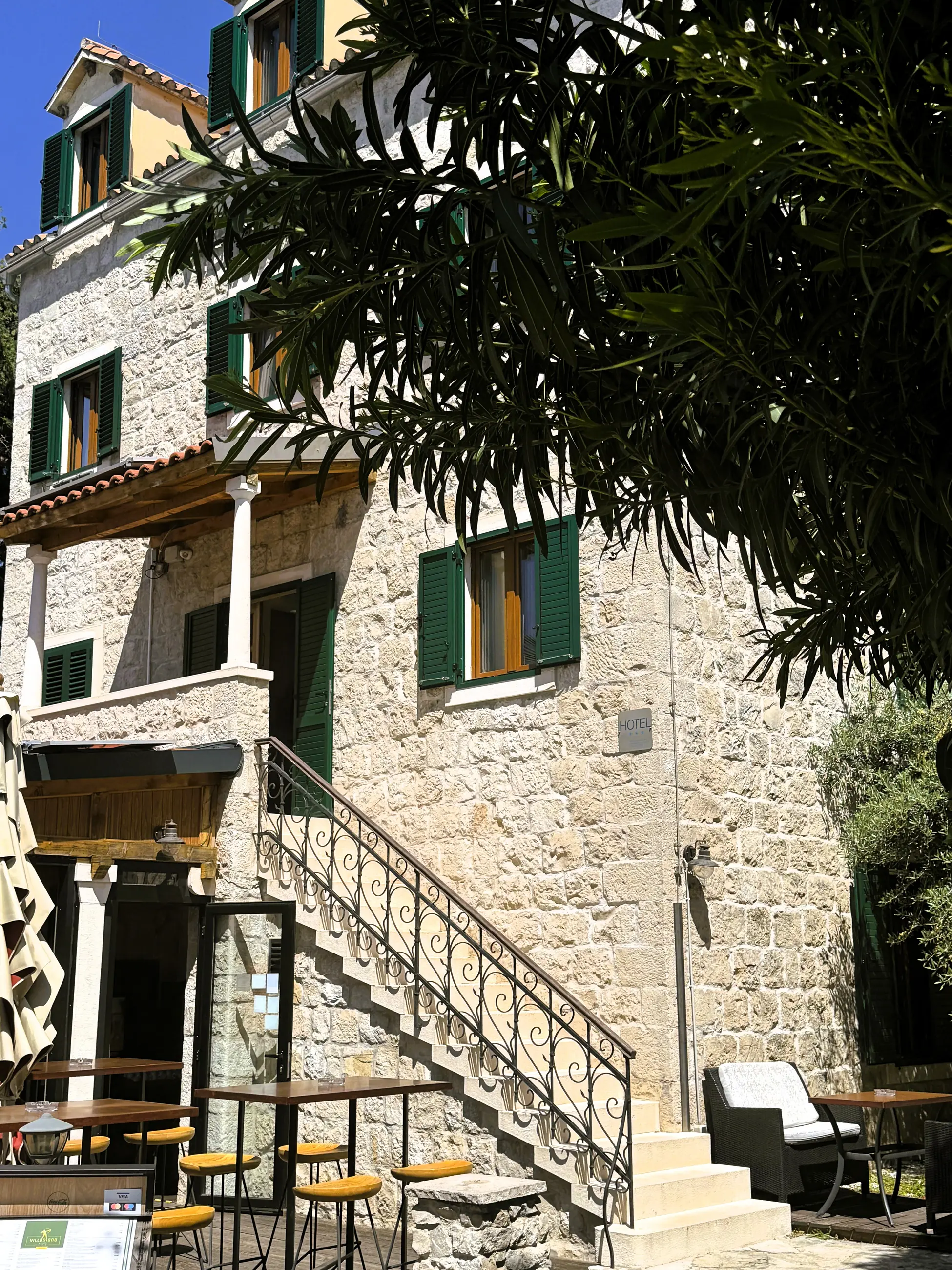
For two days like that, where you sleep matters most. A few minutes' walk east of the walls begins Lučac, an old Split suburb that was a village before it was a neighbourhood. Our stone house from 1881 stands there, three hundred metres from the Palace and four hundred from the ferry port. Close enough to arrive before the crowds in the morning, far enough aside to sleep without the noise of the Riva.
Day one: the heart of Diocletian's Palace
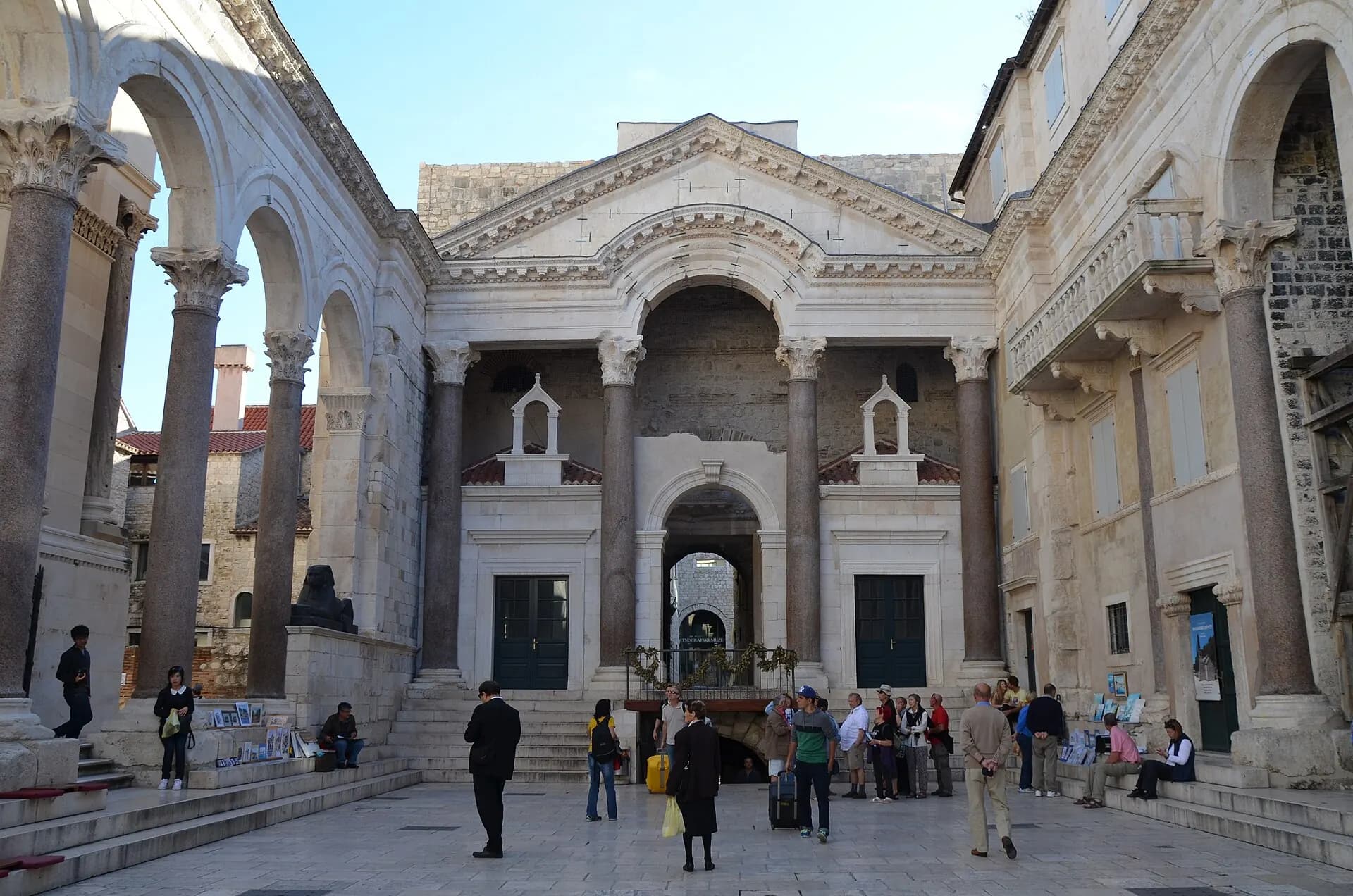
Enter through the Golden Gate on the northern side, because that is how people entered before: straight onto the decumanus, the main east–west street. A few steps and you are on the Peristyle, the open courtyard with red granite columns brought from Egypt. Morning is when you see why Diocletian chose this spot: the sun falls down the columns and sound bounces off the stone as it would in a theatre.
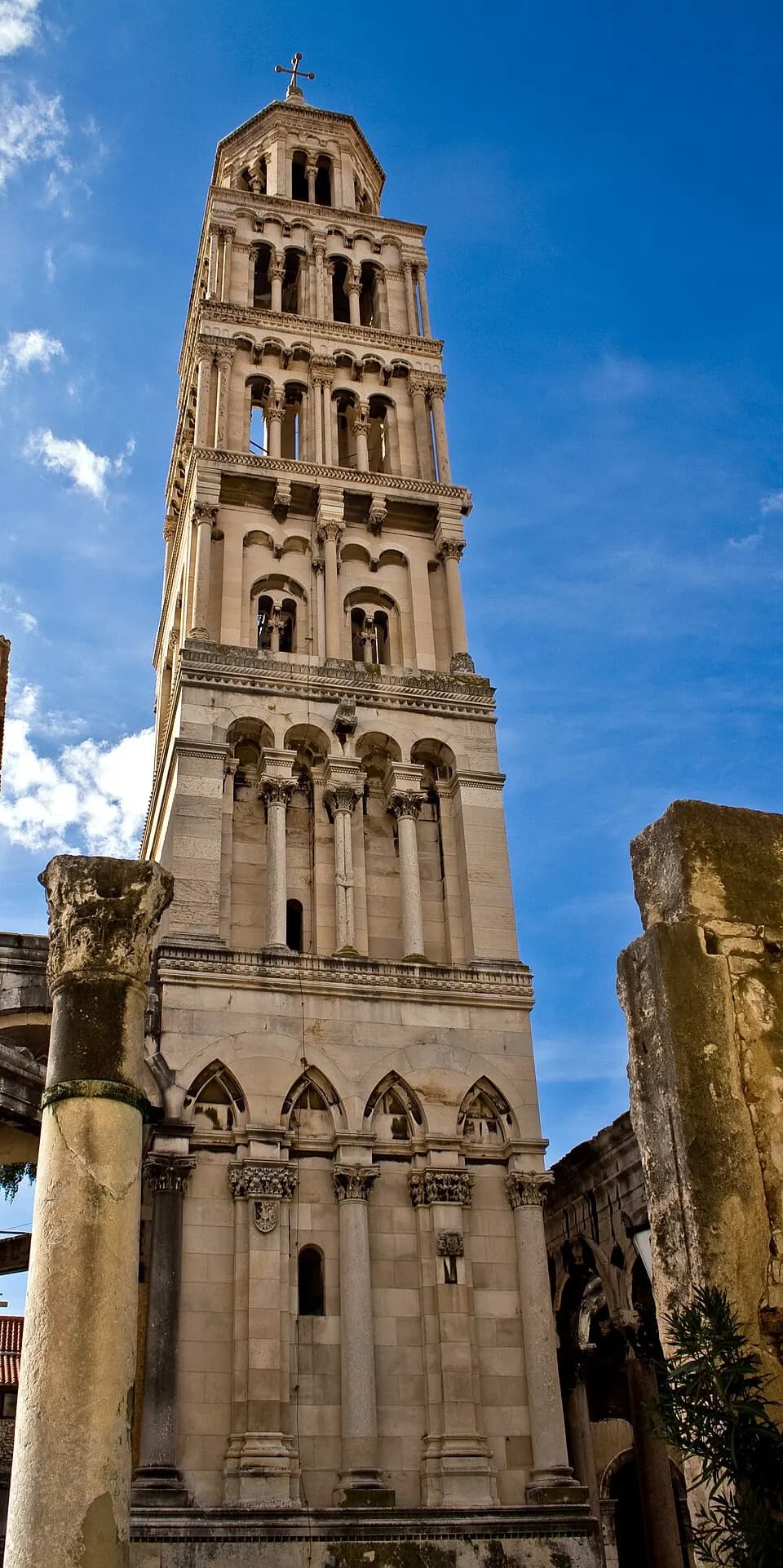
From the Peristyle you step into the Cathedral of Saint Domnius, originally the emperor's mausoleum and today one of the oldest cathedrals in the world still in use. The climb up the bell tower is narrow and steep, but the whole peninsula opens up at the top. Afterwards go down into the cellars: these halls carried the imperial apartments above and lay buried for centuries, which is why they survived better than anything above them.
Go back to the Peristyle and step into the Vestibule, a round hall whose roof is open to the sky. The acoustics are such that klapa singers perform there without amplification, and passers-by stop to listen. Afterwards get lost on purpose: the lanes inside the walls are too narrow for two abreast and lead to the Pjaca and the Fruit Square, where the palace ends and the medieval town begins — and you can see it in the stone.
The afternoon belongs to the Riva. The seafront promenade is where Split looks at itself, and coffee there is never drunk quickly. From its western end the path climbs Marjan, the wooded hill that is to this city what Central Park is to New York, only with a view of the islands. The steps start in Varoš, the old fishermen's quarter. Climb to the first viewpoint an hour before sunset and stay until the lights come on.
In the evening walk back to the eastern side and have dinner with us, in the garden under the palms. Pizza is baked on stone from slowly fermented dough, the pasta is made fresh, and grilled dishes arrive with local wine. After a day spent on your feet, the way from the table to your room is a staircase. Breakfast starts at seven, an hour before most of Split opens.
Day two: the market, the sea and the islands
Start the second day in the garden. Breakfast from seven means you are standing at the Palace wall before the first groups arrive from the port — and in August that is the difference between a photograph and a queue. Take your time: the market is a few minutes away, and it is downhill.
Begin the second day at the Pazar. Split's green market sits right against the eastern wall of the Palace, which puts it between us and Diocletian. In the morning it smells of figs, tomatoes and lavender, and it sells olive oil, cheese kept in oil, and dried fruit. It is not arranged for visitors, and that is exactly why it is worth seeing: this is where the city buys lunch.
From there Bačvice is four hundred metres away. It is the city beach, sandy and shallow far out into the sea, and the only place in the world where picigin is played — a game without winners whose whole point is to keep the ball from touching the water. Empty in the morning, a stage in the afternoon. A swim before noon and a coffee on the terrace above the beach is the most Split hour there is.
For the afternoon, choose between two. The Meštrović Gallery on the slope of Marjan is the villa the sculptor built for himself, with a garden above the sea and work in stone and bronze. If you would rather have the city than a gallery, walk through Varoš instead: narrow stone lanes, steps between houses and chapels older than most European cathedrals, all within a fifteen-minute walk.
Leave the last evening to the Riva at dusk, when the stone cools and the lights come on along the water. If you have a day to spare, the ferry port is four hundred metres from our house: Brač is an hour away, Hvar a little more, and a morning ferry has you back by dinner. That is why Split is a starting point and not only a destination.
Practical tips
A few practical things. Split is a walking city and everything in this guide can be done on foot, but the stone is polished and slippery, so bring shoes with rubber soles rather than only sandals. The airport is twenty-two kilometres away and a bus runs into the centre. In summer, come to the Palace before nine or after seven in the evening; in between, the lanes fill with groups off the ships.
And finally: two days are enough for Split, but only if they are not spent arriving and leaving. Staying in a neighbourhood you can walk everywhere from means both evenings stay yours, instead of one being eaten by transport. That is the whole logic of this guide, and the only reason it is written from here — a house standing three hundred metres from the emperor's gate.
The market and the fish hall work in the morning and are best seen before ten. If you travel in July or August, book your room and your ferry ahead; in May, June and September the sea is still warm and the town is walkable. In winter Split is a holiday of its own: there is coffee in the sun, and the Peristyle is yours.
Header photo: Hedwig Storch, CC BY-SA 3.0, Wikimedia Commons
All stories